A dry film lubricant is a thin, solid lubricating layer left on the surface of a part. Unlike oil or grease, which stay wet, a dry film does not rely on a liquid to separate surfaces. It stays in place on the part and can reduce friction without leaving a greasy residue. Tec-Slip is Tectorius’s line of dry film lubricant coatings.
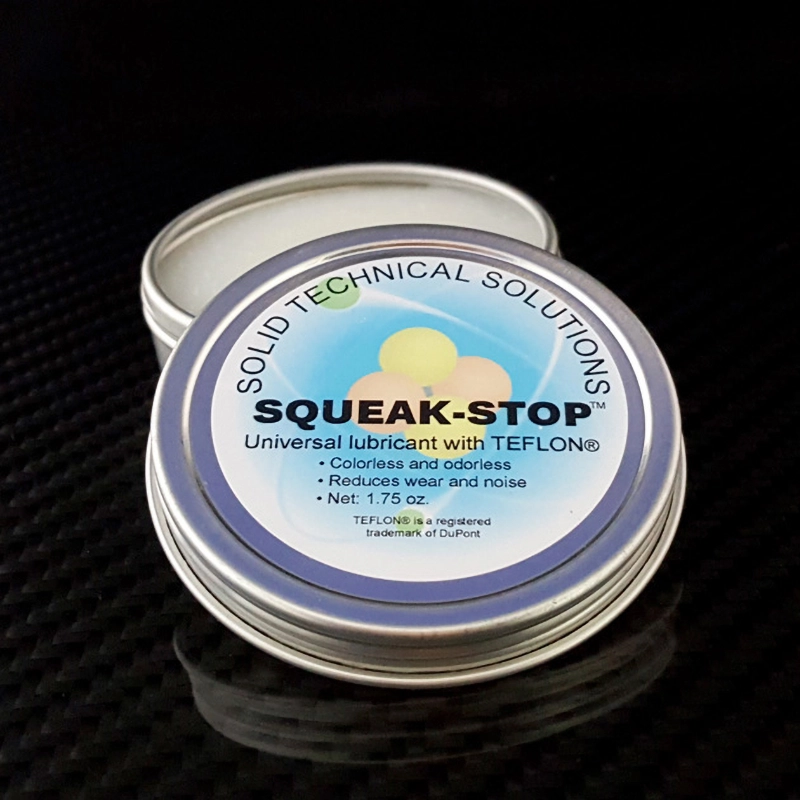
Determine how the lubricant will be applied and where it needs to stay. Tec-Flon 600 Series is available as oil and grease formats, Squeak-Stop is a paste, and Tec-Slip is a dry film coating applied to the part. Operating temperature, load, chemical exposure and how the part is handled all affect the best choice, so contact our engineering team with your conditions.
PFPE stands for perfluoropolyether, a synthetic fluorinated lubricant chemistry known for high-temperature stability and chemical inertness. Tec-Flon 600 Series uses PFPE lubricants and is suited to demanding environments where conventional lubricants can break down, such as extreme heat or aggressive chemicals.
Yes. A lubricant reduces friction in the threads and under the head, so the same torque can produce a higher clamp load than on an uncoated fastener. When you introduce a lubricant coating, you should re-validate your torque specification on the actual joint. Our engineering team can help you set targets.
A dry film does not stay wet or sticky the way oil and grease do, so it is less likely to hold dust and debris or transfer to surrounding materials. This makes it a good fit for assemblies where cleanliness matters. Confirm compatibility with your own process and materials.
Lubricant coatings control friction and wear between contacting surfaces, and in fasteners they help achieve consistent torque and tension. Anti-seize compounds are designed to prevent threads from seizing or galling, especially under heat or corrosion, and to make later disassembly easier. See our Anti-Seize Compounds category for those products.
Looking for a solution? We can help.
Our experts are here to learn more about your need.