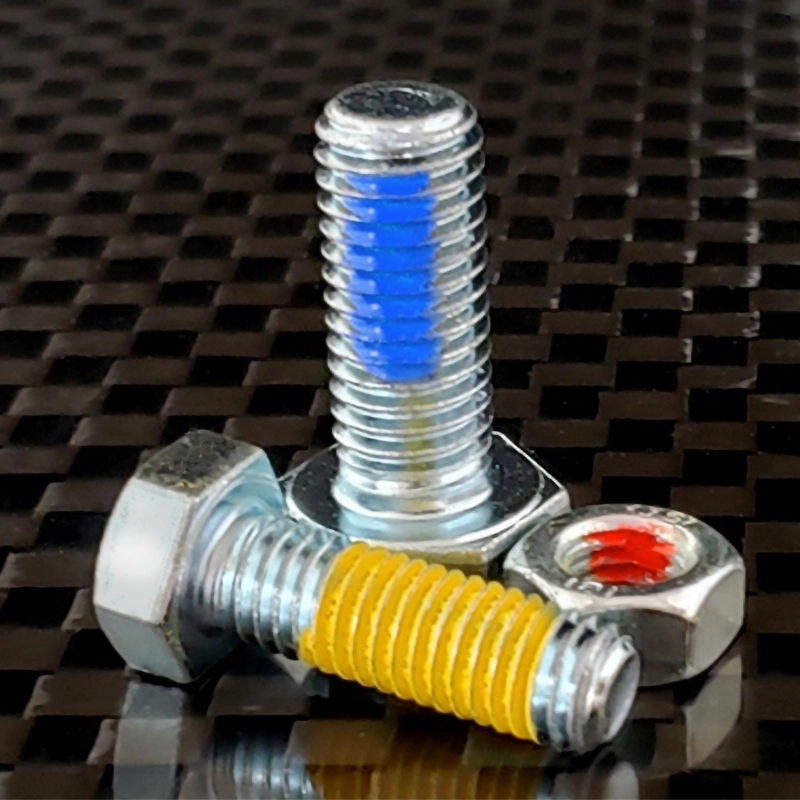
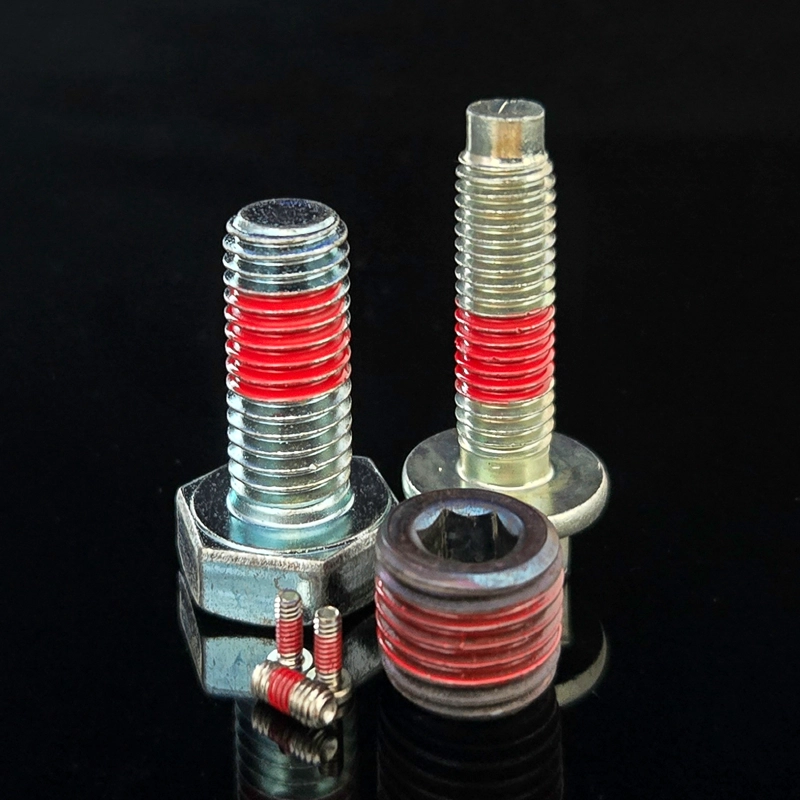
A nylon locking patch is a nylon element pre-applied to the threads of a fastener. As the fastener is driven, the nylon is compressed against the mating threads and creates prevailing torque. This resists loosening caused by vibration and dynamic loads without adding separate locking hardware.
A nylon insert lock nut carries a nylon ring built into the nut, so the locking feature is limited to that nut. A nylon patch is applied directly to the threads of the fastener itself, so the locking function comes with the bolt, screw or nut you are already using. This can simplify part counts and inventory.
In most applications, no. The nylon element creates the locking action on its own, which is why nylon patches can replace additional locking hardware and reduce assembly steps. Joint design requirements vary, so confirm with your engineering team.
Temperature capability depends on the grade. Standard nylon patches suit general operating conditions, while Tec-Lok 130 Series is designed for higher temperatures. See the technical data sheet for the rated range, or contact our engineering team for your application.
Yes, within limits. Nylon recovers its shape after removal, so patched fasteners can typically be reinstalled while still providing locking torque. The number of reuse cycles depends on the product, the joint and the installation torque. For critical joints, check that prevailing torque remains within your specification before reuse.
A pre-applied nylon patch removes manual dispensing, has no cure time and keeps locking performance consistent from part to part, which suits high-volume assembly. It also allows rework, since fasteners are not bonded in place. If you need a permanent, high-retention bond, consider a reactive threadlocker instead.
Looking for a solution? We can help.
Our experts are here to learn more about your need.