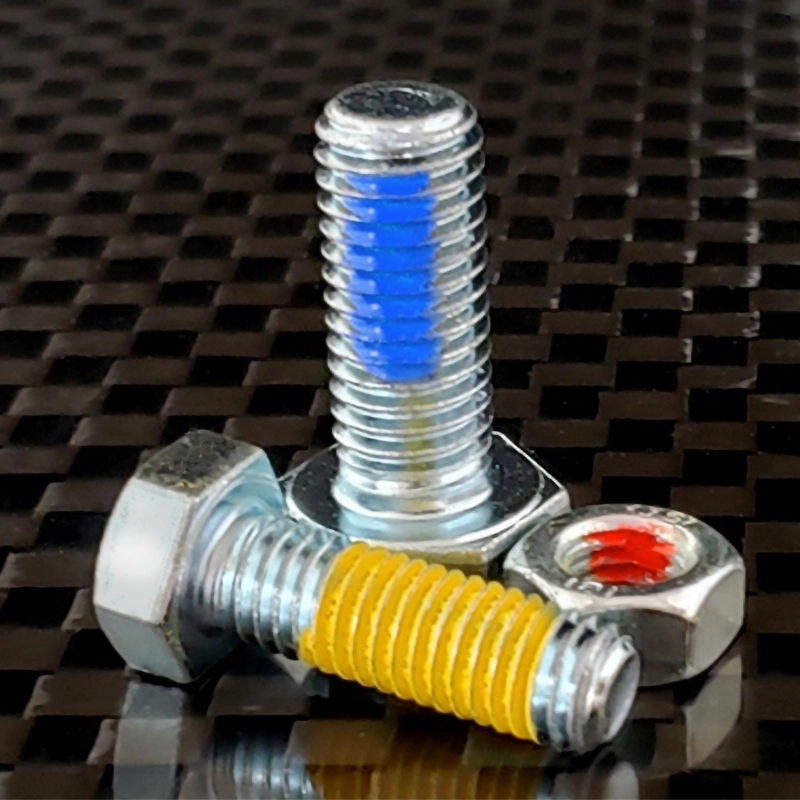
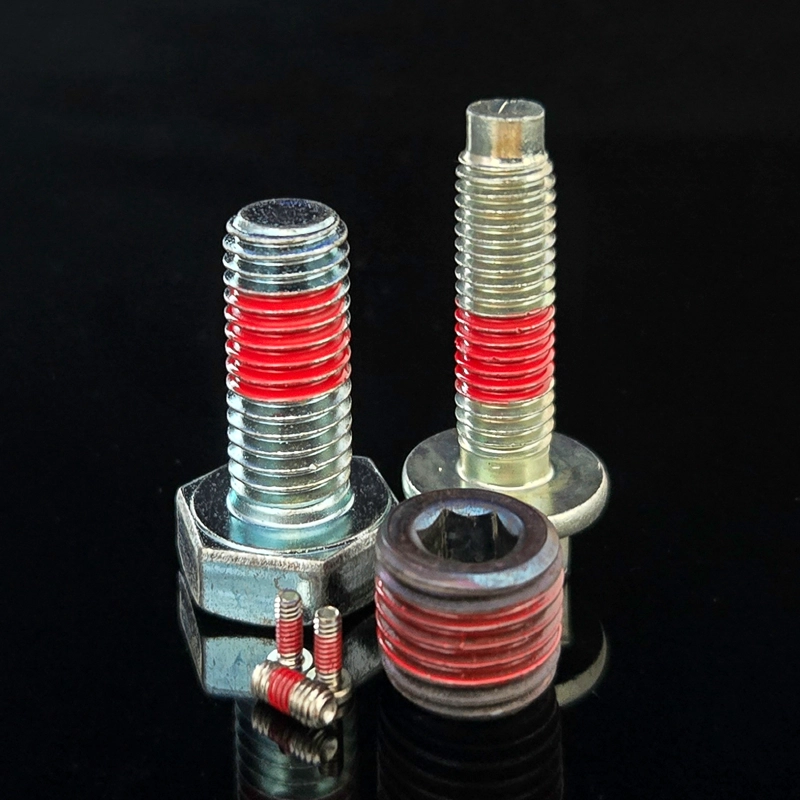
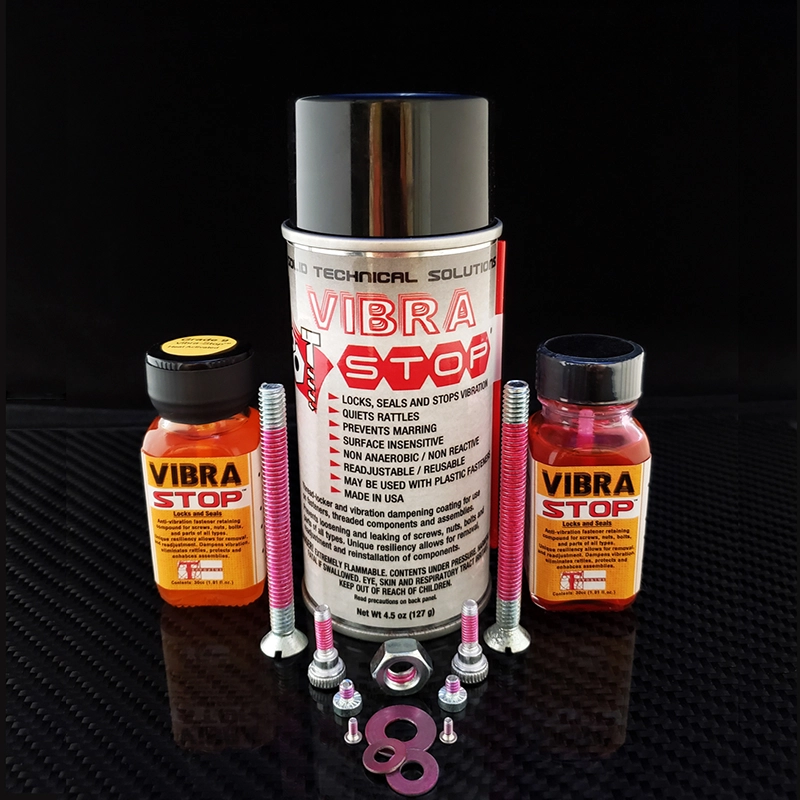
A passive threadlocker locks a fastener through its physical properties rather than a chemical reaction. It is typically a polymer patch, such as Tec-Lok, or a compound, such as Vibra-Stop, applied to the threads. When the fastener is installed, the coating creates resistance that helps prevent loosening from vibration.
Reactive threadlockers cure chemically during assembly and form a strong, semi-permanent bond for long-term retention. Passive threadlockers do not rely on a chemical cure. They resist loosening through a dry coating or patch, which generally makes adjustment and disassembly easier. Choose reactive when retention is the priority and passive when the joint will be serviced often.
Prevailing torque is the resistance you feel while turning a fastener before it seats. A nylon locking patch on the threads is compressed against the mating threads during assembly. That constant pressure keeps friction in the joint, so the fastener resists backing off under vibration and shock.
No chemical cure is involved, so there is no cure time to plan around. Fasteners with a locking patch are ready to assemble as supplied. Vibra-Stop dries quickly after application and the fastener can be used right away.
Yes, many passive locking products can seal against fluid or gas leakage while also resisting loosening. Sealing performance depends on the product, the thread fit and the operating pressure, so check the product page and contact us for pressure-critical joints.
Tec-Lok 100 Series offers powdered and liquid nylon locking patches. Tec-Lok 130 Series is a high-temperature locking patch for extreme temperature environments. Vibra-Stop is an anti-vibration compound and threadlocker, suited to applying by hand on small runs. Compare them on their product pages or ask our engineering team.
Looking for a solution? We can help.
Our experts are here to learn more about your need.